Kingdom Hearts Was Never Supposed To Exist (But We’re Glad It Does)
When you think about it, we as gamers have gotten way too used to the idea of Kingdom Hearts by this point. After all, who would have guessed that a strange combination between classic Disney movies and Square Enix’s Final Fantasy franchise would result in one of the most creative, endearing, and brilliant video game series of all time?
Kingdom Hearts’ success, impact, and influence feel like lightning in a bottle, a miracle that may never be replicated again. Curiously enough, however, there’s actually some truth behind this feeling, because Kingdom Hearts was created by a series of accidental coincidences that connected two companies, and together they took a big risk during a time in which they were not as profitable as they are today. Needless to say, gamers around the world are more than grateful that Kingdom Hearts even exists in the first place, as these games have changed their lives forever. So, to celebrate this series as a whole, let’s take a deep look at its bizarre origins.
It All Happened Thanks To Mario

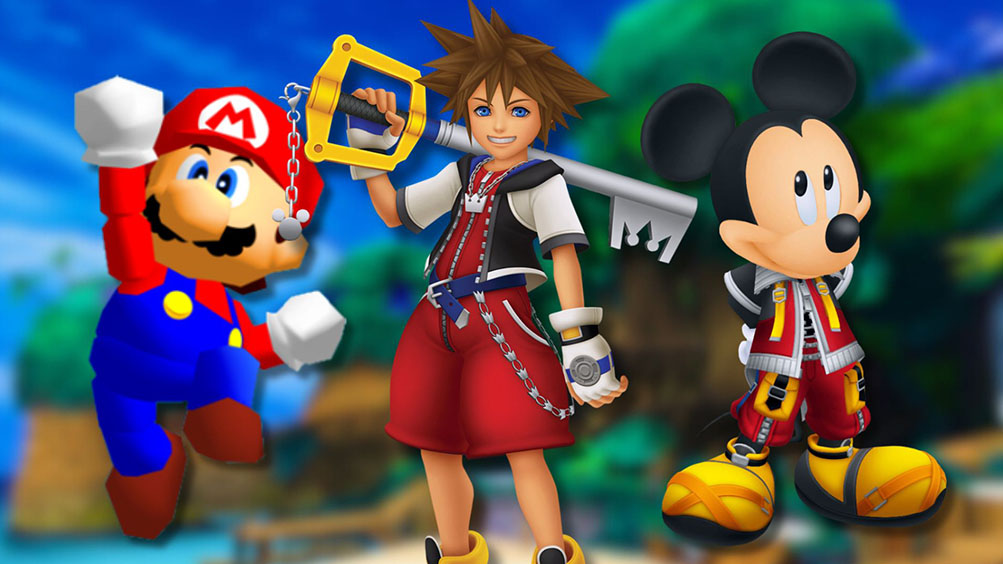
That’s right; a series that has seen characters as iconic as Donald Duck and Cloud Strife sharing the same screen technically started thanks to the impact of another cultural icon, Nintendo’s very own Mario. Most gamers are aware of the fact that 1996’s Super Mario 64 single-handedly revolutionized how movement in a 3D environment is designed, thanks to the innovative analog stick of the Nintendo 64. In a way, Mario’s first foray into the third dimension basically influenced every single 3D video game that came after it, whether it was directly or indirectly.
Tetsuya Nomura is a famous video game artist, director, and designer who has worked on numerous important Squaresoft/Square Enix projects, not to mention that he’s commonly credited as the creator of the Kingdom Hearts series. Like many other big names in the industry, he was both shocked and delighted by Super Mario 64’s innovation, as the game came out around the time he was working on Final Fantasy VII. He recalls that its fully three-dimensional spaces and the freedom they gave to the player to run around them had a huge impact on his younger self, and he immediately tried to replicate its success by creating a new game with similar 3D movement and environments.
According to Nomura, when he disclosed his plans to his colleagues, most of them told him that “Mario's already a world-famous character. It would be impossible to start from scratch with an all-new character,” not to mention that one of them even said, “The only way you could do it is with characters that are as well-known as Disney.” Disney… that’s the word that remained stuck in Nomura’s mind for the following years.
For a little while, it seemed like his dream of creating a fully 3D video game with a recognizable cultural icon was not meant to be, until a fateful encounter completely shifted his career (and, by extension, gaming as a whole) into a new and exciting direction.
A Literal Elevator Pitch Changed Everything
Do you know what an “elevator pitch” is? This is basically an umbrella term for a clear and succinct sales pitch that can be done so quickly and so efficiently that it would only take a short elevator ride to explain it in its entirety. Well, in a fun turn of events, Kingdom Hearts was born out of a literal elevator pitch between SquareSoft and Disney. According to Nomura himself, both companies shared a building in the 90s (we’re specifically talking about Disney’s Japanese division, of course), so one day, game producer Shinji Hashimoto ran into a Disney executive on an elevator, which gave him enough time to pitch the idea of a collaboration.
One day, Nomura was called into a room where Hashimoto and Hironobu Sakaguchi (the creator of the Final Fantasy series) were discussing what they were going to do with Mickey Mouse in this upcoming project that Disney had approved. They were pitching around different ideas until Nomura —who was present due to an entirely different reason— overheard them, put his foot down, and stated, “I want to be a part of this.” Unbeknownst to the three of them at the time, these would be the words that would end up changing Tetsuya Nomura’s career forever, as his dream of leading a Disney-based game was finally coming into fruition.
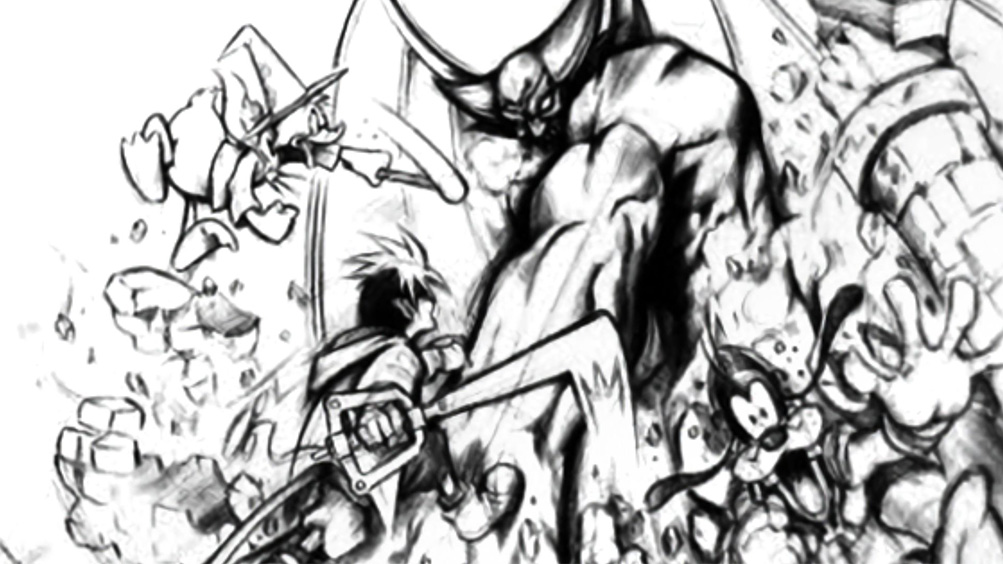
But it was not smooth sailing from there, far from it, because handling valuable properties owned by a company as big as Disney required a lot of time, attention to detail, and, unfortunately for Nomura, direct approval from both parties involved. Shortly after finishing the development of Final Fantasy VIII, the young director gathered a team of artists and developers that would help him take on this ambitious new project, and they quickly stumbled upon their first battle: trying to convince Disney to use an original character as the game’s protagonist, instead of relying solely on Mickey, Donald, Goofy, and the others.
Nomura has said many times that Disney originally wanted him to make a game centered around one of its characters and suggested many ideas, but he kept shutting them down because, according to him, they just didn’t fit his vision. At one point, Nomura even interrupted a presentation and said, "I won't make such games," which undoubtedly (and understandably) shocked the Disney executives. He eventually pitched a primitive version of his own idea: a game where a human character would explore various worlds based on classic animated Disney movies, and, despite some hesitation on Disney’s part, they ended up greenlighting it. The fact that Tetsuya Nomura passionately carried on his vision and was able to repeatedly say “No” to one of the biggest entertainment companies in the world is one of the many reasons we can safely say today that Kingdom Hearts’ very existence is a miracle. Disney could have easily grown tired of Nomura’s attitude and shut down the entire project, but they clearly saw something special in his ideas.
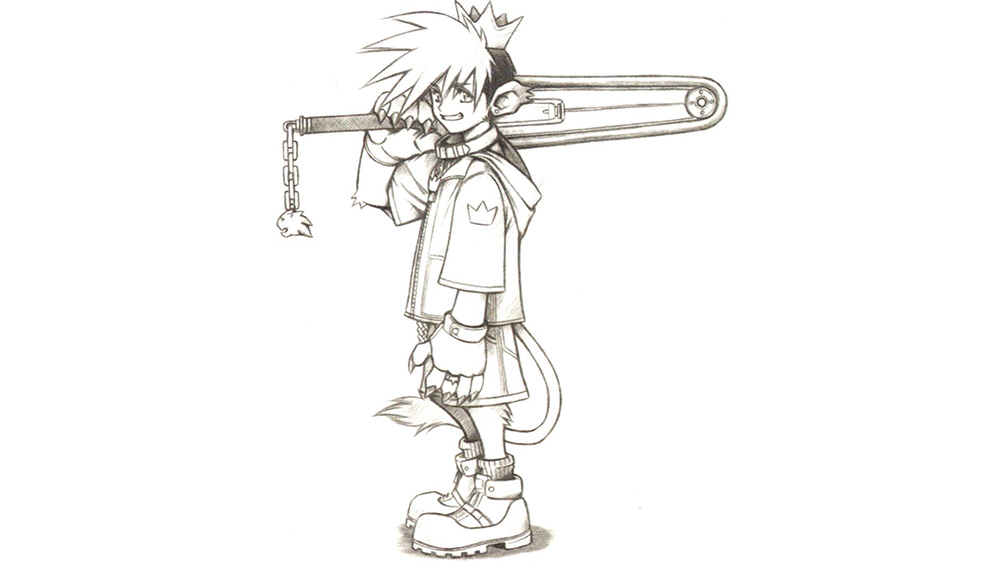
There was only one small problem they had to iron out before production on the game could finally begin: the actual design of the aforementioned human protagonist. Nomura originally showed Disney a sketch of a boy with lion-like features (like a tail and claws), wielding a giant sword that looked like a chainsaw. Naturally, the executives were both shocked and horrified by this bizarre design, but, since Nomura didn’t speak English, he was unable to understand their responses. With enough time and communication, Nomura was able to slowly change the protagonist’s design and weapon so it could finally appeal to the Disney team, which resulted in the cheerful boy we all know and love, Sora, and his magical key-shaped weapon, the Keyblade, both of which became hugely recognizable video game icons.
Curiously enough, one of the people who supervised and believed in the project was none other than Michael Eisner, the CEO of the Walt Disney Company between 1985 and 2004. To this day, he’s infamous among Disney fans due to his questionable business decisions, especially those surrounding the company’s many theme parks. However, it seems like Eisner’s bizarre mentality was a blessing in disguise, as the Kingdom Hearts series would most likely not exist without him. While he didn’t exactly comprehend what the game’s appeal was and was reportedly neutral for most of its development, he apparently gave Nomura and his team a surprising amount of creative freedom, with words of encouragement such as “Keep at it, and do it right.”
The Original Kingdom Hearts Is A Magical Disney Adventure Like No Other
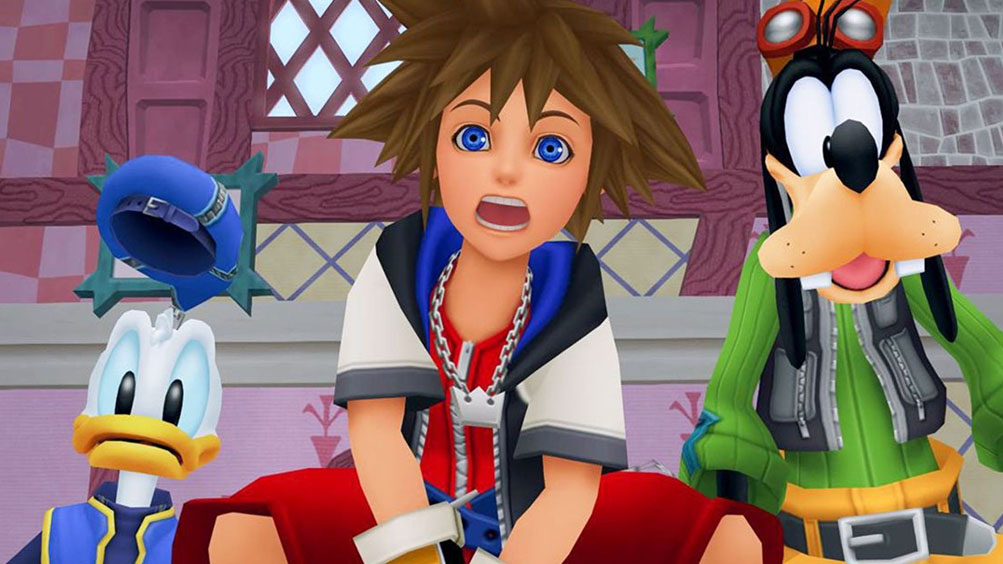
After a long and strange development process that was marked by constant changes in regard to the game’s plot, characters, and even the Disney worlds that were going to appear in it, Tetsuya Nomura’s ambitious dream of a 3D adventure with figures that were even more recognizable than Mario finally became a reality on March 28, 2002, when Kingdom Hearts officially launched in Japan, exclusively on the PlayStation 2. The game was received extremely well almost immediately, and it wouldn’t come out in North America until September 17 of the same year. Those six extra months of development allowed Nomura and his team to analyze exactly what few flaws the game had and add a lot more content that wasn’t present in the original Japanese release.
Kingdom Hearts not only resonated with gamers and critics because it featured several characters from their favorite Disney movies and Final Fantasy titles, but also because its gameplay was way more accessible, streamlined, and entertaining than any other RPG SquareSoft had made up to that point. The battles in Kingdom Hearts are not turn-based like in Final Fantasy but rather in a fast-paced real-time combat system that is easy to understand but difficult to master. Sora can not only use his Keyblade to physically hit and defeat enemies, but he can also cast various elemental spells with different effects and summon Disney characters to aid him in battle. And that’s not even mentioning that he’s accompanied by Donald Duck and Goofy throughout the entire adventure, both of whom can help him with special attributes and abilities of their own.
Kingdom Hearts stood out back in the early 2000s, mainly because no other video game out there was like it. It still clearly had roots in the JRPG genre (which were reflected by its anime-like art style and its fantastical story), but it also felt like a love letter to Disney Animation as a whole, due to the fact that it let players visit worlds based on Alice in Wonderland, Tarzan, Hercules, Aladdin, Pinocchio, Winnie the Pooh, The Little Mermaid, The Nightmare Before Christmas, and Peter Pan, with special appearances by characters from Cinderella, The Sword in the Stone, 101 Dalmatians, The Lion King, Mulan, Dumbo, Bambi, Final Fantasy VII, Final Fantasy VIII, Final Fantasy X, and many other beloved movies and games people grew up with.
We also can’t move on without mentioning the beautiful soundtrack by the legendary Yoko Shimomura, one of the most talented composers in the gaming industry, who would end up working on the music of every subsequent Kingdom Hearts sequel. Whether Sora is having fun in a colorful Disney world or confronting an evil villain in an intense boss battle, the music in this game perfectly fits every situation, and these tunes will repeatedly get stuck in the minds of anybody who has listened to them.
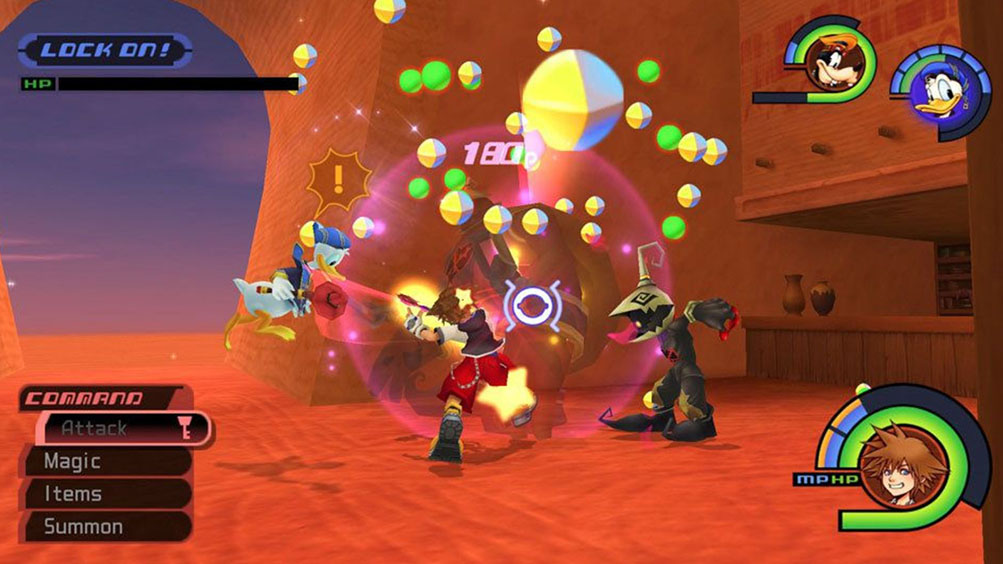
So, can we claim that Tetsuya Nomura achieved his dream of making a 3D game that could rival Super Mario 64? Of course, Kingdom Hearts is obviously nowhere near as popular or recognizable as Mario, but this is still an absolutely incredible video game that saw huge financial success (with over 6 million copies sold), became one of the most critically acclaimed PS2 exclusives, and kick-started one of the most popular and profitable video game franchises of all time, so it’s safe to say that he at least achieved what he initially set out to achieve.
It’s a good thing that Disney decided to go with Nomura’s vision, because the premise of visiting various worlds based on classic Disney movies while playing as a human character who feels like a “fish out of water” and can feel fascinated and excited by everything he sees while doing so (just like any human child would) worked perfectly and made the entire game feel all the more special. If Sora were replaced by Mickey, Donald, or another animated anthropomorphic animal, Kingdom Hearts would have never stood out as much as it did, and it most likely would have never become the phenomenon it is today. If you somehow find yourself reading this article and you still haven’t played Kingdom Hearts, I seriously urge you to try it out because, despite being over 23 years old, it is still an outstanding game that has aged surprisingly well.
Kingdom Hearts Quickly Became A Massively Popular Game Series
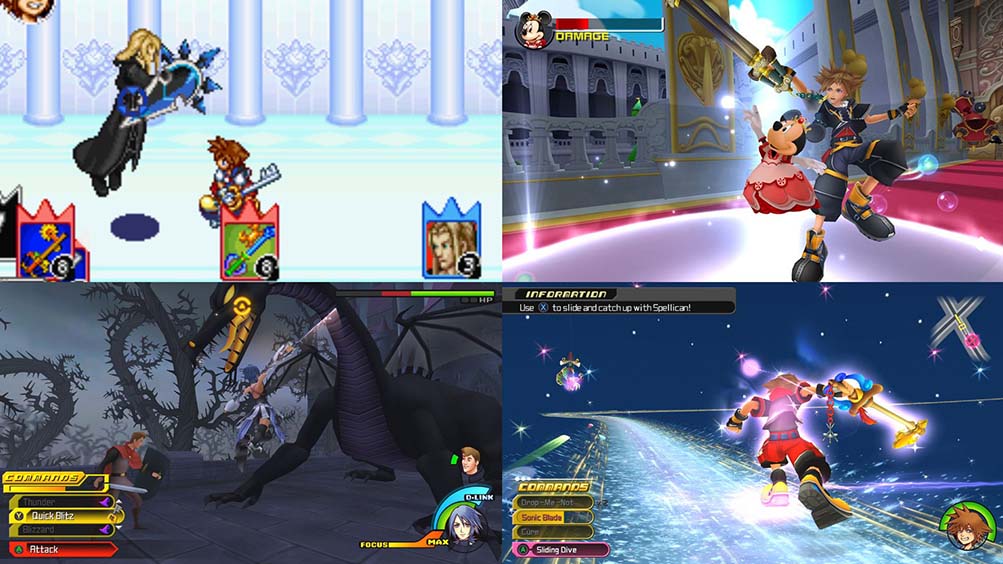
While this article mainly focused on the origins of the Kingdom Hearts series and the impact its first entry had on the gaming industry, I’d be remiss if I didn’t mention its many sequels and spin-offs that make up the huge franchise this quirky little game spawned. Both companies involved in the production of Kingdom Hearts were clearly quite happy with its success, as Disney quickly ordered the production of a pilot for an animated series based on it (which, sadly, was ultimately cancelled), and Squaresoft highly benefited from its high sales, as it had recently lost a lot of money due to the financial failure of its first feature film, Final Fantasy: The Spirits Within. Both Kingdom Hearts and Final Fantasy X allowed it to stabilize its finances during the early 2000s, shortly before it merged with Enix in April 2003 and became Square Enix (a name that it maintains to this day).
As for Nomura himself, he didn’t waste any time and immediately began working on a follow-up that would take place many years after the events of the first game. However, after hearing that many children wished to play Kingdom Hearts on handheld consoles, he also began the development of a Game Boy Advance title. This decision marked the beginning of a bizarre but unique dynamic that the Kingdom Hearts became infamous for: the synergy between mainline, numbered entries released on home consoles, and experimental side games released on handhelds. In 2004, Square Enix released Kingdom Hearts: Chain of Memories for the GBA, which boasted a weird but interesting card-based combat system, and its plot featured a rethread of Sora, Donald, and Goofy’s adventure from the first game. However, its story was 100% canonical, meaning that, when Kingdom Hearts 2 came out on PS2 two years later, many players found themselves confused by its plot, seeing as most of them had no idea Chain of Memories even existed.
Fortunately, Chain of Memories received a PS2 remake titled Re: Chain of Memories, which helped answer their questions, but Square Enix kept releasing various games on handhelds throughout the late 2000s and early 2010s, which was made even worse by the fact that they were exclusives to systems from different brands (for example, 358/2 Days and Re: Coded came out on Nintendo DS, while Birth by Sleep came out on PlayStation Portable). Fortunately, modern gamers don’t have this issue anymore, because recent remastered collections like Kingdom Hearts HD 1.5 + 2.5 ReMIX and Kingdom Hearts All-in-One Package allow them to experience almost every game in the series on one console. Nevertheless, due to this admittedly confusing release schedule, the franchise was never able to shake off the reputation of being “confusing” and “difficult to follow”.
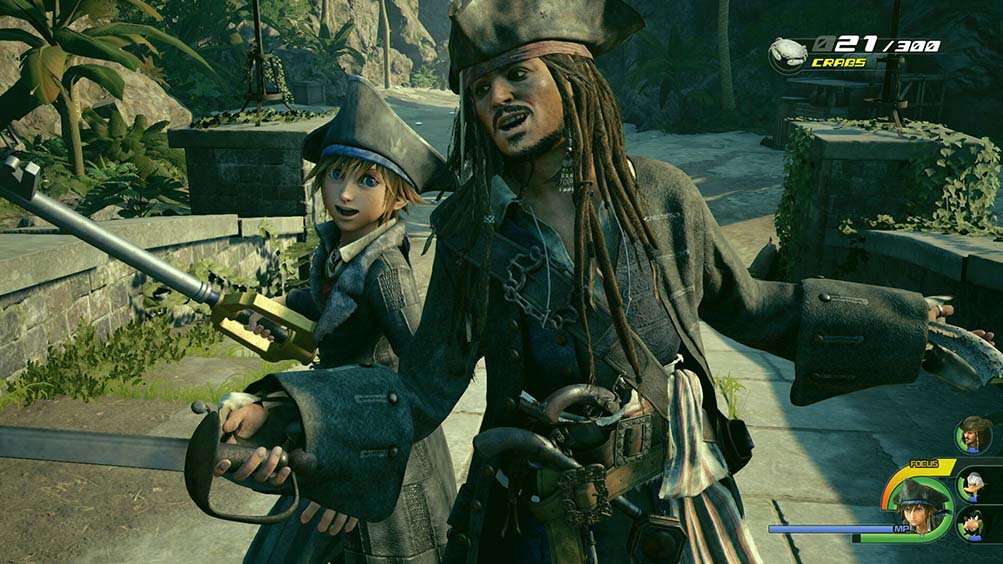
As for the games themselves, they just kept getting bigger and more ambitious with each new entry. It’s evident that Tetsuya Nomura was given more and more creative freedom, as Kingdom Hearts basically became his own personal project, a distinct game series with a deep, emotional, layered, and fascinating storyline that caught the attention of almost everyone who experienced it, and one in which Disney characters appeared frequently and/or had a prominent role, but it never felt like a generic licensed product. This is why the release of Kingdom Hearts 3 back in 2019 was such a monumental moment for the entire gaming industry, as it marked the end of the Dark Seeker Saga and satisfyingly closed off most plot threads and character arcs that had been introduced up to that point. On the other hand, advancements in technology and video game graphics allowed Nomura and his team to create worlds based on a vast array of movies from across all of Disney’s history and faithfully replicate their art style, from 3D animated masterpieces like Monsters Inc. and Toy Story to action-packed live-action films like Pirates of the Caribbean and Tron. No matter how big and extravagant the story of the Kingdom Hearts games got, it never abandoned its Disney roots, which was a brilliant move, seeing as this is the one attribute that helped it stand out from other action JRPGs on the market.
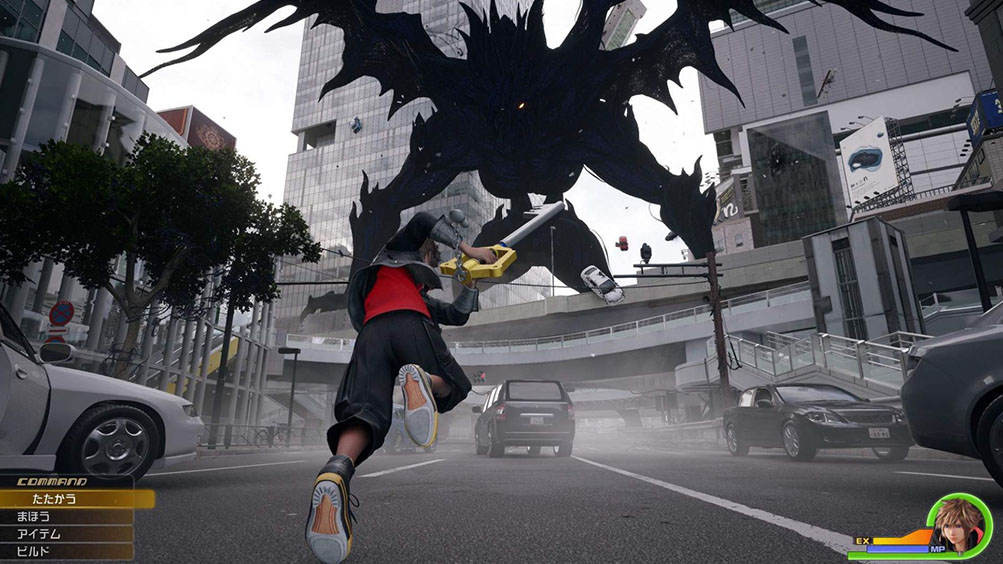
While not every Kingdom Hearts game is perfect, most of them received positive reviews, and the entire series sold over 36 million copies worldwide in total, not to mention that it has amassed a huge and passionate fan base. The next mainline entry, Kingdom Hearts 4, is currently in development and was announced back in 2022 during the franchise’s 20th Anniversary celebration. Unfortunately, Square Enix has revealed little information about this upcoming sequel ever since, but this still hasn’t prevented fans from feeling extremely excited about it and speculating on which Disney worlds they are going to be able to explore in Sora’s next big adventure.
Tetsuya Nomura (and Square Enix) did the impossible: he fought back against Disney and insisted that they let him realize his vision to create one of the most distinct, magical, and entertaining video game franchises. Needless to say, Disney was nowhere near as big in the late 90s as it is nowadays, and it’s safe to say that, hypothetically speaking, it most likely wouldn’t even allow Kingdom Hearts to exist in the first place if Square tried to pitch it today. The fact that all of this happened because Nomura wanted to use a face as recognizable as Mickey Mouse’s to compete with Mario, and because two Japanese executives had a fateful meeting in an elevator, is as unbelievable as it is magical. At the end of the day, however, most fans (myself included) wouldn’t have it any other way, because Kingdom Hearts definitely has one of the craziest origin stories in the entire video game industry, and we’re glad it happened in the first place.

Julián is an Argentinian journalist, writer, and researcher with a love for retro gaming, anime, and manga. Julián is always eager to share interesting stories about the fascinating video game industry.